


Our pipeline is led by NDV-01, a sustained-release intravesical therapy for non-muscle invasive bladder cancer (NMIBC), advancing into the Phase 3 RESCUE registrational program across two independent approval pathways. Our second program, Sepranolone, targets compulsivity-related disorders through a differentiated mechanism and is progressing toward a Phase 2 trial in Prader-Willi syndrome.
NDV-01 is a sustained-release intravesical formulation of gemcitabine and docetaxel (Gem/Doce) designed to enable prolonged bladder exposure and consistent local drug delivery while simplifying administration in the clinical setting.
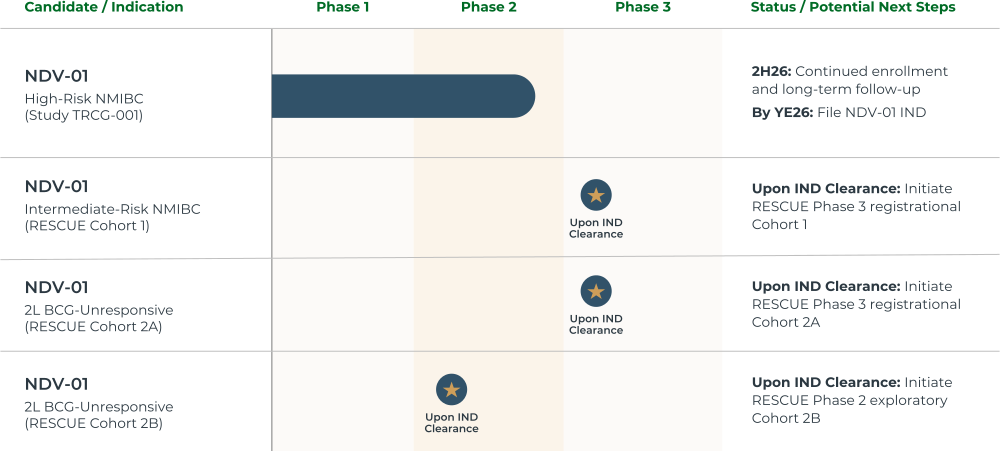
In an ongoing Phase 2 study, NDV-01 has produced durable complete responses with no ≥ Grade 3 treatment-related adverse events.
NDV-01 is designed to overcome key limitations of conventional Gem/Doce, including complex preparation and prolonged instillation, through a ready-to-use formulation administered in-office in under five minutes. These features align with the needs of community urology practices, where approximately 80% of NMIBC patients are treated, supporting broad real-world adoption beyond academic centers.
The program is advancing into the Phase 3 RESCUE registrational program, expected to initiate upon IND clearance, with two independent approval pathways: second-line (2L) BCG-unresponsive NMIBC and the adjuvant setting for intermediate-risk NMIBC. Together, these pathways provide a clear and efficient route to approval across both difficult-to-treat and large patient populations.

Sepranolone is a clinical candidate with a differentiated mechanism of action, targeting compulsivity-related disorders through modulation of GABAA receptor activity.
Prior clinical and preclinical data support the potential for Sepranolone to affect food craving, appetite, and compulsive behaviors.
Sepranolone is advancing toward a Phase 2 clinical trial in Prader-Willi syndrome, expected to initiate upon IND clearance, to further evaluate safety, tolerability, and effects on behavioral and appetite-related outcomes.


